How to Show Allowances in a Construction Bid
To show allowances in a construction bid, describe the item that's still open, give it a visible budget amount, and explain what that figure includes. Identify what happens once the choice and actual cost are known. A clear allowance lets the customer compare quotes and helps the estimator see whether something is a confirmed cost, a provisional selection, or outside the current scope.
Explain what the allowance is meant to cover
Start with the missing decision or information. Perhaps a client has picked a shower layout but hasn't chosen the tile. You can carry a defined amount for the tile material while pricing the installation you can reasonably specify. Make clear whether your amount includes freight, accessories, labor or other relevant costs. If a different tile might change the labor, describe how that would be handled rather than assuming every selection can use the same installation price.
Give the allowance a unit or quantity
Consider a simple example where the project allows $1,200 for a finish material for a measured area. State the area and the kind of finish covered. Keep the estimated labor basis visible in the supporting estimate. If the client picks a different layout or quantity, you can show how the scope changed as well as how the material price changed. An unexplained budget line is harder to use because it doesn't identify what would put the selection outside the original basis.
Separate the amount from the decision process
Show whether the allowance is already included in the displayed bid total. Then describe how a selection becomes final and who can approve it. A customer might want to see a sample, confirm lead time, and approve the difference before the material is ordered. The estimator might need to confirm the vendor quote or recalculate a quantity. Write down both responsibilities so the project doesn't rely on a verbal assumption.
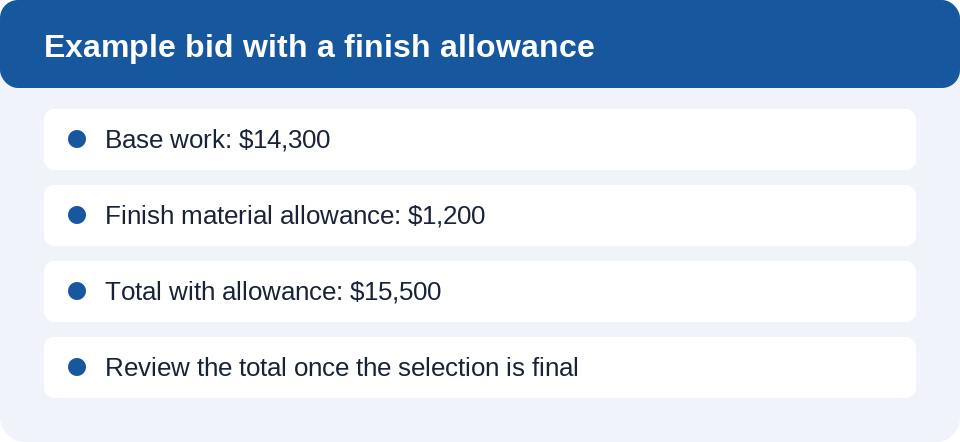
For example, a bid might show a $14,300 base amount and a $1,200 finish allowance, for a total of $15,500 using those assumptions. If the agreed final material cost is higher or lower, show the allowance, the new amount, and the difference using the agreed treatment. If freight, installation or another scope item changes too, include those details separately. The figures are illustrative. Follow the instructions in the actual bid documents and the agreement for your job.
Distinguish allowances from alternate work
An alternate may be an option to add, omit or swap a defined part of the base scope. An allowance commonly budgets a decision or cost within the described scope. The bid form may provide specific labels. Use the labels and treatment the bid instructions require. That keeps the reviewer from treating an optional upgrade as a missing line in the base price.
Make the estimate easy to reconcile later
Give each allowance a stable description or number and record its basis with the estimate. Add the source of the budgeting figure and the date it was checked. If an addendum changes the scope that the allowance covers, update the amount and description together. The construction addendum guide shows how to connect a change to an estimate line so a reviewer can trace both versions.
When a customer makes a selection, save the approved detail beside the original bid. Record the revised quantity and vendor quote, if relevant, and show whether the change affects the schedule. Give the office and field team the same version of the instruction before you order or build. A tidy record makes it much easier to explain a revised price months after the estimate was sent.
Review the bid as the recipient will read it
Check whether the customer can see the allowance amount, what it covers, and what will happen next. Compare the total on the bid against your worksheet and check whether any allowance was counted twice. If you've carried several provisional items, include a short checklist of decisions that need a date. Note any item with a long lead time so the client can decide what to review first.
Explore the Construction Cost Estimator features, and use its takeoff workspace to connect the measured area to your estimate where appropriate. Try one example in which the allowance and base work are separate. Review the finished bid before you send it and make sure the original estimate can still explain every total.