Construction estimating guide
A Roofing Cost Estimator for Contractors Who Price on the Roof
November 23, 2026 · 5 min read
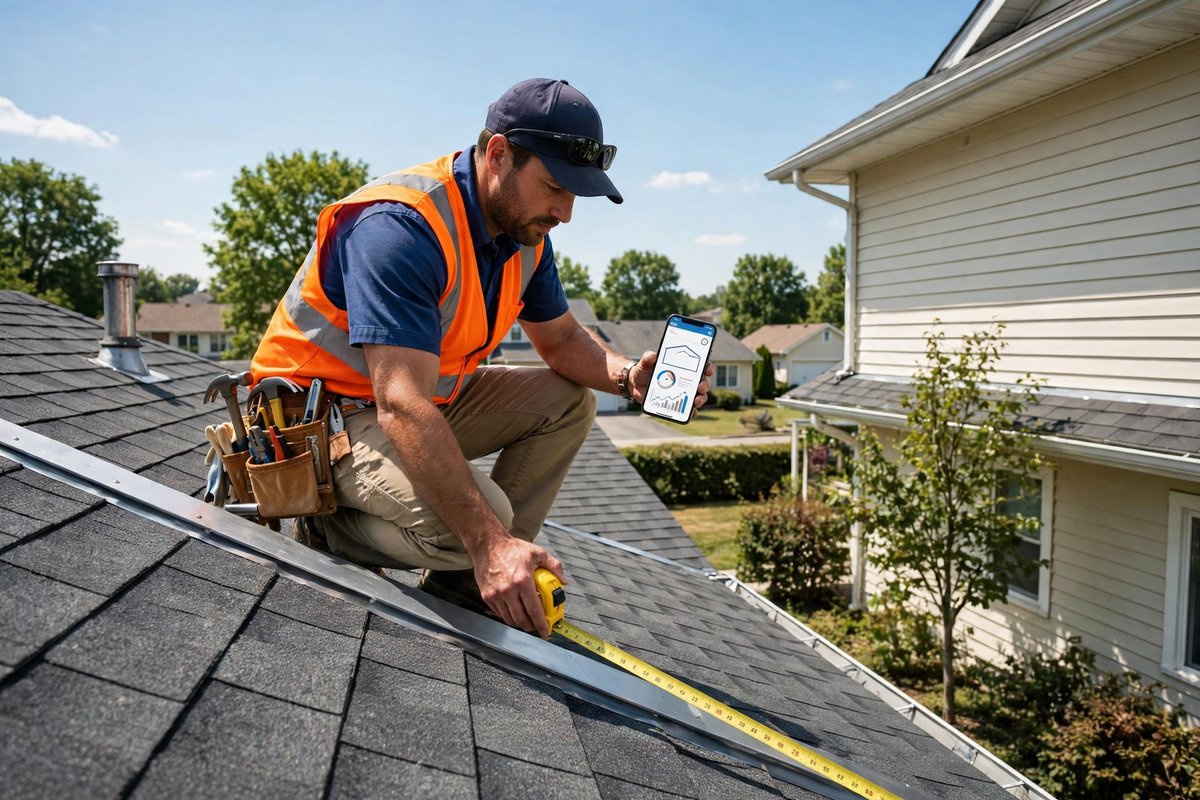
A roof looks like a simple surface until you price it like one. The pitch changes the square footage, the old roof has to come off in layers, the flashing around every chimney and vent is its own job, and the waste factor on a cut-up roof is nothing like the waste on a clean gable. A roofing cost estimator for contractors exists for exactly this job: measure the roof once, price every line the work actually involves, and hand the customer a number that still has your profit in it when the crew shows up.
What a roofing cost estimator for contractors has to count
Whether you build the number in an app or on a clipboard, these are the lines a complete roofing estimate carries. Miss one and it comes out of margin.
| Line item | How to measure it | Common miss |
|---|---|---|
| Tear-off | Squares of existing roof, layers if more than one | A second layer found under the first |
| Underlayment | Squares, plus ice-and-water shield at eaves and valleys | Shield priced as plain felt |
| Shingles | Squares plus waste factor for pitch and cuts | 10% waste on a roof that needs 15% |
| Flashing | Linear feet of valleys, step flashing, and drip edge | Reusing old flashing that should be replaced |
| Penetrations | Each vent, pipe boot, skylight, and chimney | Pipe boots counted as one line for all sizes |
| Ridge and hip | Linear feet of ridge cap and hip cap | Ventilation left out of the ridge line |
| Decking repair | Sheets or square feet, priced as an allowance | No allowance, so rot becomes a change order fight |
| Disposal | Tonnage from tear-off squares and layers | Dump fees on heavy multi-layer tear-off |
The square is the unit that matters
Roofing is sold by the square — one hundred square feet of roof surface — and the pitch decides how many squares a footprint becomes. A 1,500-square-foot footprint on a 4/12 pitch is roughly 16 squares; on a 10/12 it can be over 20. Measure the roof surface, not the floor plan, and let the pitch factor do its work. Every other line in the estimate — underlayment, shingles, labor — hangs off that square count, so getting it right is the whole job. When the roof comes with drawings instead of a ladder, the takeoff tool can pull the quantities straight from the plan.
Tear-off is its own job
Tear-off is the line that separates a roofing bid from a shingle price. It is labor, disposal, and risk, priced per square because every square of old roof has to come off before the new one goes on. Count the layers: a roof with two layers of shingles is twice the tear-off and twice the dump weight of a single layer, and the second layer is usually discovered, not advertised. Price decking repair as an allowance per sheet, agreed in writing, so the rotten sheet you find on tear-off day is a line you already priced, not a change order the customer resents.
Flashing, valleys, and penetrations are where roofs leak — and bids too
The field shingles are the easy part. The roof fails at the details: valleys where two slopes meet, step flashing where the roof meets a wall, pipe boots, skylights, and chimneys. Each one is a small job with its own material and its own labor, and a roofing cost estimator for contractors prices them one at a time instead of burying them in a blended square-foot rate. Walk every penetration and count it out loud. A chimney needs step flashing, counter-flashing, and a cricket on the uphill side if it is wide enough; a skylight needs a flashing kit, not a tube of sealant and a hope.
Waste is the same story. A clean gable roof might waste ten percent. A cut-up roof with hips, valleys, and dormers can waste fifteen percent or more, and the starter course, ridge cap, and hip cap are separate quantities, not rounding. If the waste lives in one blended rate, every upgrade conversation becomes a negotiation against your own quote. Itemized lines end that argument before it starts.
How the estimate gets built on the roof
The estimate is won or lost at the walkthrough, while the homeowner is standing in the yard imagining a dry house. That is the moment to produce a number. With the Construction Cost Estimator app, you walk the roof, photograph the worn valleys, the soft decking, and the flashing that has to go, and talk through the scope out loud. The app drafts the itemized estimate from your walkthrough — tear-off, underlayment, shingles, flashing, penetrations — priced from your saved rates, not national averages.
You review every line, adjust the ones the job demands, and send a branded PDF quote from your phone before you leave the job site. Your prices are learned once and reused on every bid, so the tenth roof takes minutes, not an evening at the kitchen table. See pricing and features on the homepage, or check the bid board for work in your area.
From walkthrough to signed quote
The close matters as much as the count. A roof is a big, visible, once-in-twenty-years purchase; the contractor who leaves a clean, itemized quote while the customer is still thinking about the leak gets the job over the one who emails a lump sum three days later. Quotes from the app carry your branding and your terms, so the yes you get in the driveway becomes a signed job the same day.
Read the driveway estimating guide for the same itemized approach on flatwork, then open the app and price your next roof from the job site, not the kitchen table.